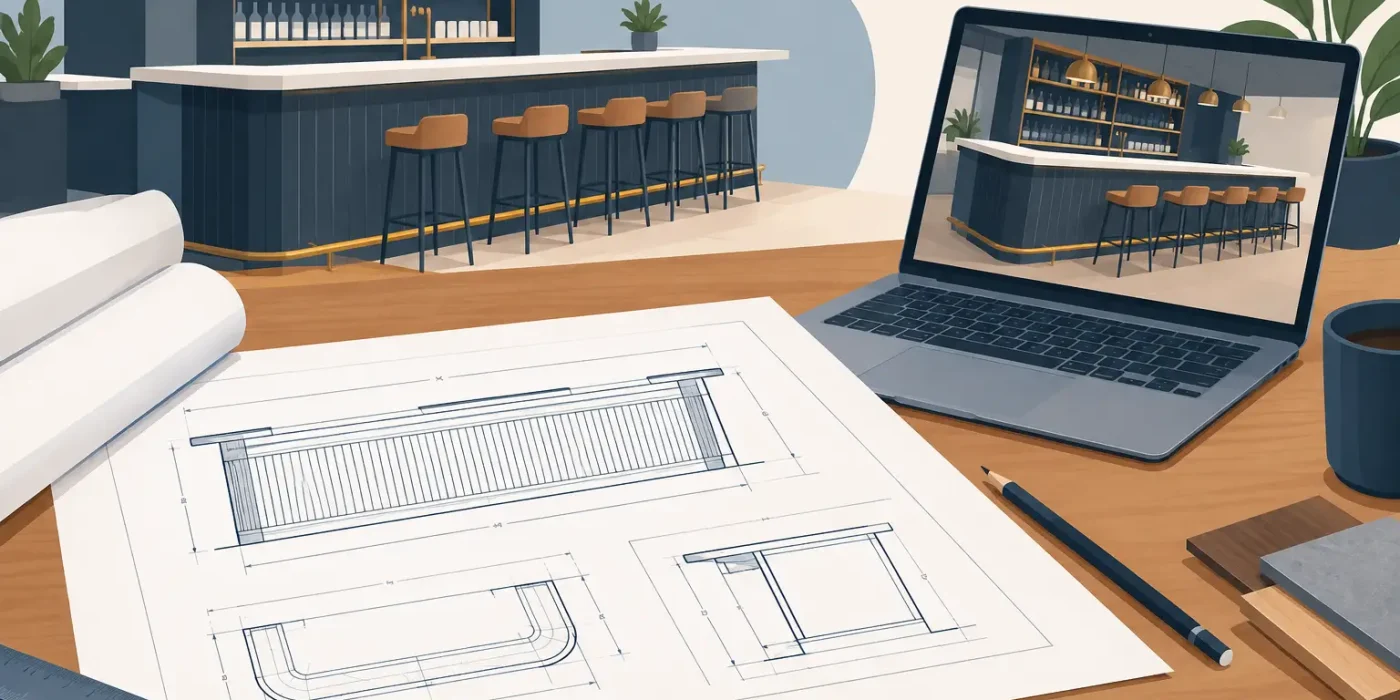
Design Studio Dubai

Why Do Fit-Outs Overrun Budgets? 8 Causes

Why Do Fit-Outs Overrun Budgets? 8 Causes

A hotel lobby package may look fully resolved at concept stage, yet the budget can begin to move as soon as the joinery fabricator studies the elevations, the MEP contractor reviews ceiling zones, or the operator requests a finish sample. Why do fit-outs overrun budgets? Usually, it is not one major error. It is the accumulated cost of incomplete information, late decisions, uncoordinated interfaces, and site conditions that were not fully addressed before work began.

For developers, contractors, architects, and operators, controlling a fit-out budget means treating technical documentation as a commercial control tool, not simply a drawing deliverable. The earlier project teams identify buildability, material, and coordination risks, the more options they have to protect design intent without absorbing avoidable variation costs.

Why Do Fit-Outs Overrun Budgets During Delivery?

Fit-out work is highly detailed and interface-heavy. A single guestroom, retail unit, restaurant, or villa can combine bespoke joinery, decorative finishes, loose furniture, lighting, HVAC grilles, fire protection, AV systems, access panels, and signage within a relatively small area. Each trade depends on dimensions, levels, finishes, tolerances, and sequencing from other trades.

When drawings leave these decisions open to interpretation, the issue does not disappear. It moves downstream to procurement, fabrication, or site installation, where correcting it costs more and disrupts the program. This is why a project can appear to be within budget at tender stage but exceed its allowance during execution.

1. Design intent has not been translated into buildable detail

A concept drawing can communicate atmosphere, material direction, and layout clearly while still lacking the information needed to price or fabricate the work accurately. Joinery elevations without internal construction details, finish callouts without approved specifications, and reflected ceiling plans without service coordination create pricing assumptions.

Contractors may allow provisional sums to cover uncertainty. Others may price the most basic interpretation to remain competitive. Once the intended quality, hardware, backing, edge details, lighting channels, or concealed access requirements are clarified, the actual cost becomes visible.

Fabrication-ready shop drawings reduce this gap. They define dimensions, materials, thicknesses, internal carcass construction, hardware, finishes, setting-out points, and installation requirements. They also expose where a design decision has a direct cost consequence before materials are ordered.

2. Scope changes arrive after procurement has started

Not every change is avoidable. A hotel operator may revise a room standard, a retail brand may issue updated merchandising requirements, or an owner may select a different stone after reviewing samples. The financial effect depends on timing.

A finish substitution before procurement may require only a revised drawing and updated quotation. The same substitution after mock-up approval, fabrication, or delivery can create abortive work, restocking charges, revised lead times, and labor inefficiency. Changes to a ceiling layout can also trigger revisions across lighting, sprinklers, diffusers, access panels, and bulkheads.

The practical solution is not to prevent all change. It is to establish a controlled change process. Each instruction should identify the affected drawings, quantities, suppliers, fabrication status, schedule impact, and cost exposure before authorization. Teams need a clear record of what is changing and what remains approved.

3. Quantities are based on visual drawings rather than coordinated information

Fit-out estimates often begin before every detail is final. That is normal. The risk arises when preliminary quantities are treated as fixed budgets without a disciplined reconciliation as the design develops.

For example, a wall finish quantity may exclude returns, reveals, panel joints, backing boards, protection zones, or waste associated with a specified pattern. A joinery allowance may not include filler panels needed to address out-of-plumb walls. Decorative metalwork may be measured by elevation area while overlooking returns, framing, fixing methods, and site welding.

Accurate takeoffs require coordinated plans, sections, elevations, and details. They should also distinguish between visible design elements and the supporting construction required to install them safely and to the required quality standard. This is particularly relevant in high-specification hospitality and retail projects, where concealed work can represent a meaningful share of the final cost.

4. MEP and fit-out coordination happens too late

Services coordination is one of the most frequent causes of disruption on interior projects. A joinery unit may conflict with a fire hose reel, a duct route may reduce wardrobe depth, or a sprinkler head may fall outside the required ceiling layout. On site, these conflicts can lead to cutting, reworking, relocating, and patching completed finishes.

The expense is rarely limited to the trade making the alteration. A revised bulkhead can affect ceiling framing, gypsum board, paint, lighting, air distribution, fire alarm devices, and inspection approvals. In occupied buildings, access restrictions and after-hours work may add further cost.

A coordinated drawing package should test services against ceilings, walls, joinery, door swings, access requirements, and maintenance clearances. It should also establish responsibility for final setting out. Coordination does not remove every site issue, but it changes many surprises into planned decisions made before installation.

5. Material selections do not match the budget or supply chain

A finish can be visually appropriate and still be commercially unsuitable for the project. Imported stone, specialty veneers, custom laminates, decorative glass, premium hardware, and made-to-order light fittings may carry longer lead times, minimum order quantities, or high waste factors. A product that appears cost-effective per square foot can become expensive once cutting layouts, edge treatments, freight, mock-ups, and spares are included.

This does not mean projects should default to lower-cost materials. It means specifications should be evaluated against performance, availability, installation method, maintenance requirements, and approved alternatives. For a restaurant or cinema, durability and replacement availability may matter as much as initial purchase price. For a luxury villa, visual continuity across large veneer or stone areas may justify a higher allowance.

Early sample review and material schedules help teams make these trade-offs deliberately rather than reactively.

6. Existing conditions differ from the information provided

Renovation and refurbishment projects carry a different level of uncertainty from new-build fit-outs. Existing walls may not be square, slab levels may vary, old services may remain undocumented, and concealed defects may only be discovered during demolition. Even a minor dimensional variance can affect factory-made joinery, stone panels, glass partitions, and door frames.

Site verification should take place before final fabrication drawings are released. Critical dimensions, wall conditions, service locations, opening sizes, and floor levels must be checked and recorded. Where conditions remain uncertain, drawings should identify the required site tolerance and the party responsible for confirming it.

This approach is especially valuable when a fast-track program creates pressure to release packages early. A controlled hold point is usually less costly than remanufacturing a completed item that cannot be installed.

7. Value engineering is introduced as a late cost-cutting exercise

Late value engineering often damages both the budget and the design because it focuses on removing visible elements after the underlying cost drivers are already committed. Replacing a specified finish at the last minute may require new samples, revised details, procurement changes, and client reapproval. The project saves in one area while losing time and money across others.

Effective value engineering begins with technical alternatives. Can a detail use a standard hardware system without changing the visual outcome? Can panel modules be adjusted to reduce material waste? Can a decorative feature be designed for off-site fabrication rather than labor-intensive site work? Can maintenance access be incorporated without disruptive future alterations?

These questions work best when designers, estimators, fabricators, and technical drafters review the package together. The goal is not to dilute design intent. It is to select construction methods that deliver it reliably.

8. Approvals, responsibilities, and instructions are unclear

Fit-out projects move quickly, and informal conversations are common. However, a verbal agreement on site can become expensive when teams later disagree on what was approved, who was responsible, or whether a change was included in the original scope.

Drawing registers, revision clouds, approval logs, material submittals, and written site instructions create accountability. They help project managers distinguish between a contractor omission, a consultant revision, an owner request, and an unforeseeable condition. That distinction matters when assessing variation entitlement and protecting contingency.

Building Budget Control Into the Drawing Process

The strongest cost-control measure is a coordinated technical package issued at the right level of maturity. Before procurement, project teams should be able to trace each major interior element from design intent through dimensions, material specification, fabrication detail, interface coordination, and installation sequence.

For complex joinery and fit-out packages, an independent drafting resource can add capacity and discipline to this process. Design Studio LLC’s team of full-time joinery and fit-out drafters supports project teams with detailed shop drawings that clarify scope before it reaches the workshop or site. The value lies in making decisions visible early, when they remain manageable.

Budget certainty will always depend on project type, procurement route, market conditions, and the level of change expected from the client. A fast-track retail rollout needs a different control strategy from a bespoke villa or a hotel renovation in an operating property. Yet the principle remains consistent: every unresolved interface is a potential cost event.

A well-coordinated drawing is not merely a record of what should be built. It is an opportunity to test the work before money, materials, and labor are committed. When teams use that opportunity early, they protect both project margins and the quality of the completed interior.
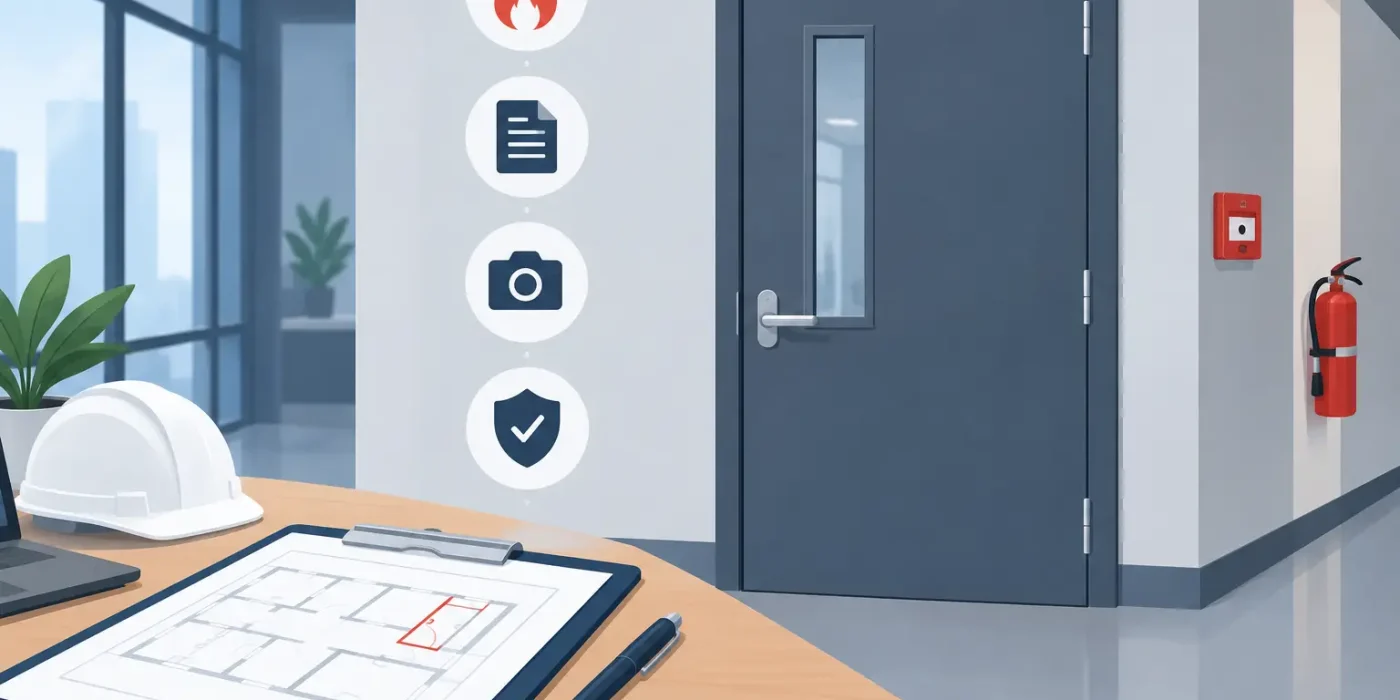

How to Document Fire-Rated Doors for Fit-Outs

How to Document Fire-Rated Doors for Fit-Outs

A fire-rated door can look identical to a standard timber, steel, or glazed door once installed. The difference is in the tested assembly and the information that protects it from being substituted, incorrectly fabricated, or compromised during installation. Knowing how to document fire-rated doors is therefore not only a code exercise. It is a coordination discipline that connects design intent, approved products, fabrication details, hardware, and site execution.

For hotels, retail stores, cinemas, villas, and commercial interiors, door packages often sit at the intersection of architecture, joinery, MEP services, access control, and life-safety requirements. A door schedule that merely labels a door “FR” leaves too much open to interpretation. Clear documentation gives the contractor and manufacturer a defined, reviewable scope before materials are ordered or work reaches site.

Start With the Tested Door Assembly

A fire rating applies to an assembly, not simply to the door leaf. Depending on the applicable building code, listing, and authority requirements, the assembly may include the leaf, frame, glazing, seals, hinges, closer, latch, lockset, threshold, vision panel, and the wall construction receiving the frame. Documentation must preserve this relationship.

The first task is to confirm the required rating for each opening from the approved life-safety drawings, code strategy, and project specifications. Do not assume that doors on the same corridor require identical ratings. Ratings can vary according to the wall type, occupancy condition, means of egress, shaft enclosure, electrical room, or compartment boundary.

Record the required rating in the door schedule using the project’s agreed terminology. Where relevant, identify whether the requirement is for fire protection only or includes smoke control, temperature-rise performance, acoustic performance, security, or accessibility provisions. These requirements frequently overlap in hospitality and commercial fit-outs, and each can influence the approved door construction.

The specified product must have evidence that supports the required assembly and local approval route. A decorative veneer, paint system, metal cladding, oversized vision panel, or non-standard louver can affect compliance if it is not included within the tested or approved configuration. This is why the drawing set should identify the performance requirement and the approved basis of design, while allowing only controlled substitutions.

How to Document Fire-Rated Doors in the Door Schedule

The door schedule is the central control document. It should allow a project manager, fabricator, consultant, and site supervisor to identify the exact opening, required performance, dimensions, finish, and hardware without relying on assumptions.

Each unique fire-rated door type should have a clear reference number linked to plan tags, elevations, and detail drawings. Include opening location, room names or numbers, door and frame material, leaf configuration, clear opening requirements, frame profile, wall type, handing, swing direction, and fire rating. State the nominal structural opening and finished opening dimensions separately where the project workflow requires both.

For a rated opening, the schedule should also identify the following information in coordinated language:

  • Required fire rating and any smoke or draft-control requirement.
  • Labeling or certification requirement for the leaf, frame, glazing, and hardware where applicable.
  • Door leaf thickness, core construction, edge detail, and approved finish.
  • Frame material, gauge or profile, anchoring method, and finish.
  • Vision panel size, glass type, bead detail, and fire-rated glazing requirement.
  • Intumescent, smoke, acoustic, or perimeter seal requirements.
  • Hardware set reference, including closer, hinges, lock, latch, panic hardware, coordinator, and hold-open devices.
  • Threshold, drop seal, kickplate, signage, access-control devices, and interface with flooring.

Avoid copying generic notes into every schedule row if a separate specification or type drawing provides the detail. The objective is not to overload the schedule. It is to make every requirement traceable. A concise schedule supported by coordinated type elevations and details is more effective than a crowded sheet with conflicting notes.

Show the Assembly, Not Just the Elevation

Door elevations should communicate the visible design and the regulated components that may otherwise be missed during fabrication. For joinery-faced fire doors, identify veneer direction, grain matching, panel grooves, reveals, metal inlays, decorative laminates, and protection plates. Then verify that these finishes and machining operations are compatible with the approved fire-rated construction.

A typical elevation should show the leaf and frame dimensions, vision panel location, hardware positions, signage, access-control reader zones, and any adjacent fixed panels. Where a door forms part of a larger timber portal, feature wall, or integrated joinery composition, separate the rated door assembly from non-rated decorative elements with clear detail references. This prevents the site team from extending combustible finishes across a frame gap or sealing line that must remain functional.

Section details are equally critical. They should show the interface between frame and wall, frame anchorage, fire-stopping around the perimeter, head condition, jamb condition, sill or threshold condition, and relationship to ceiling finishes. In fit-out projects, the wall build-up often changes after the base-building package is complete. A rated frame detail prepared for a masonry wall may not suit a stud partition, shaft wall, or glazed partition system.

Where the door sits within a rated drywall or partition assembly, reference the approved wall type directly. The frame, anchors, packers, mineral wool, sealant, and fire-stop approach must be coordinated with that wall system. A correct door leaf installed in an incorrectly prepared opening does not deliver a compliant assembly.

Coordinate Hardware Before Issuing for Fabrication

Hardware is one of the most common sources of conflict in fire-rated door documentation. The hardware set must match the door function, rating, handing, leaf size, weight, and accessibility requirement. It must also be compatible with any access-control, fire alarm, security, or building-management interface.

For example, an electrically locked door on an escape route may require a specific release arrangement during a fire alarm condition. A pair of doors may require a coordinator and sequencing arrangement. A hold-open device must be approved for the application and coordinated with the fire alarm system. These are not items to resolve informally after the joinery manufacturer has machined the leaf.

Show hardware references on plans and elevations, then coordinate the full hardware schedule with the door schedule. Confirm hinge quantity and capacity, closer size, latch type, lock function, lever height, viewer, pull handle, access reader, maglock or electric strike, and cable transfer. Include a note that field drilling, cutting, or unapproved hardware substitutions are not permitted without manufacturer approval and consultant review.

Particular care is needed for concealed closers, pivot systems, concealed hinges, flush pull details, and full-height feature cladding. These may be visually desirable but are not universally available for every fire-rated construction. The right detail depends on the selected tested system, required rating, opening size, and local authority acceptance.

Protect the Rating Through Material and MEP Coordination

Fire-rated doors are frequently affected by adjacent works. Wall finish installers may cover labels. Flooring teams may alter threshold levels. Ceiling contractors may conceal the frame head. MEP teams may request card readers, contacts, door loops, or access panels close to the opening. Documentation should anticipate these interfaces rather than leaving the door subcontractor to negotiate them on site.

Include coordinated elevations of the full wall zone when doors are integrated into reception joinery, corridor wall panels, retail displays, or hotel room entry portals. Identify stop points for cladding, required clearances, removable access panels, and areas where no fixings or penetrations are permitted. If services need to cross the rated wall near the opening, show the approved fire-stopping responsibility and detail reference.

Finishes also require discipline. The schedule should state whether paint, laminate, veneer, stainless steel, or another finish is factory-applied or site-applied. If a finish is nominated by the interior designer, require confirmation that it is permitted by the approved door manufacturer. The same applies to adhesive systems, edge bands, decorative grooves, and applied moldings.

Build a Review and Inspection Trail

Accurate drawings reduce risk, but the documentation process should also create clear approval points. Before fabrication, obtain and record the manufacturer’s technical submittal, certification evidence, hardware compatibility confirmation, shop drawings, finish samples, and any required authority approvals. Cross-check the submittal against the issued door schedule, wall types, and coordinated interior elevations.

During installation, use an inspection checklist that follows the documentation. Verify the label remains visible, frame anchorage is complete, perimeter gaps are treated as specified, seals are continuous, hardware is correctly installed, the leaf self-closes and latches, and no site modification has affected the assembly. Photograph key conditions before decorative finishes conceal them.

For larger fit-out packages, a door register can provide a practical handover record for every rated opening. It should identify the door number, location, rating, supplier, approved submittal reference, hardware set, inspection date, outstanding items, and final acceptance status. This supports quality control and gives the facilities team usable information after project completion.

A reliable fire-rated door package is built long before the first frame reaches site. When schedules, elevations, wall interfaces, hardware, and inspection records all describe the same approved assembly, project teams can protect both life-safety performance and the intended interior finish. For complex fit-out environments, that clarity is what turns a regulatory requirement into dependable construction delivery.

How to Sequence Fit-Out Installations Correctly

How to Sequence Fit-Out Installations Correctly

A hotel guestroom ceiling is closed before the FCU access panel location is confirmed. A retail feature wall arrives before its power and data points are tested. A reception counter is installed before the finished floor level is established. These are not isolated site errors. They are sequencing failures. Knowing how to sequence fit-out installations gives project teams a controlled route from approved drawings to handover, protecting design intent, program certainty, and installation quality.

Fit-out sequencing is more than placing trades in a logical order. It is the disciplined management of dependencies between structure, MEP services, finishes, joinery, equipment, inspections, and access. On villas, hotels, restaurants, offices, cinemas, and retail spaces, the correct order varies by project. The principle remains consistent: do not install work that prevents another trade from completing, testing, inspecting, or adjusting its own work.

Start With an Installation-Ready Information Package

A construction program cannot compensate for incomplete coordination. Before site installation begins, the project team should establish one coordinated information package that identifies what is being installed, where it interfaces with other elements, and what must happen first.

Shop drawings should resolve dimensions, wall build-ups, reflected ceiling plans, floor levels, material transitions, joinery fixing methods, access requirements, and service zones. They should also show the relationship between architectural finishes and MEP components. A decorative ceiling, for example, is not ready for installation until lighting, sprinklers, smoke detectors, grilles, access panels, and ceiling suspension details have been coordinated.

The same applies to bespoke joinery. Fabrication drawings must confirm wall conditions, backing requirements, electrical provisions, plumbing connections, appliance clearances, and finished floor levels before materials are released. A cabinet may look correct in elevation while being impossible to install if a concealed service point or structural projection has not been accounted for.

At this stage, create a sequence register that links each installation package to its prerequisites. It does not need to be overly complex, but it should identify approved drawings, material samples, mockups where required, preceding works, inspections, and responsible parties. This converts design information into a workable site plan.

How to Sequence Fit-Out Installations by Dependency

The most reliable approach is to sequence work according to physical dependencies rather than trade preference. A joinery contractor may be ready to install, but readiness alone is not a reason to proceed. The room, adjacent services, substrates, and access routes must also be ready.

1. Verify the base build and site conditions

Fit-out work should begin only after the relevant base-build areas are released, measured, and checked. Confirm slab levels, wall plumb, openings, shaft positions, waterproofing zones, and structural supports. Survey records are particularly valuable for high-tolerance elements such as stone cladding, feature ceilings, glazed partitions, and full-height joinery.

This early verification avoids a common and expensive problem: fabricating to design dimensions when actual site dimensions differ. Where discrepancies exist, resolve them through revised coordination drawings before installation or fabrication proceeds.

2. Complete first-fix MEP before closing surfaces

After layout setting out and partition framing, first-fix MEP work generally follows. This includes concealed electrical containment, plumbing, drainage, ductwork, pipework, fire protection, low-current systems, and equipment supports. The sequence must allow all services to be installed, pressure-tested, inspected, and coordinated before walls and ceilings are closed.

Not every service needs to be finished across the entire project before fit-out progresses. Large projects often benefit from zone-based release, such as guestroom floors, retail units, restaurant back-of-house areas, or cinema halls. However, each zone should have clear handover criteria. A ceiling zone is not released merely because services appear installed. It must be verified against coordinated drawings, tested where applicable, and free from unresolved clashes.

3. Close partitions and ceilings only after inspections

Wall boards, ceiling closures, and decorative bulkheads are significant hold points. Once complete, they restrict access to concealed services and can make later changes disruptive. Before closure, inspect service routes, access panel locations, support framing, acoustic treatment, fire stopping, and ceiling coordination.

This is also the right point to confirm that access remains practical. An access panel may satisfy a drawing requirement but still be ineffective if it opens above fixed joinery, a tight soffit, or an inaccessible ceiling bay. Coordination should consider future maintenance, not only installation.

4. Establish wet-area and floor-finish readiness

Bathrooms, pantries, kitchens, and other wet areas require their own sequence. Waterproofing, flood testing, screed levels, drainage falls, and wall substrate preparation must be approved before tiles, stone, sanitaryware, or fixed cabinetry are installed. Starting finishes before tests are completed can turn a manageable defect into a demolition exercise.

Floor finishes need the same discipline. Confirm moisture conditions, screed curing, level tolerances, and protection requirements before laying carpet, timber, vinyl, stone, or tile. Finished floor level is a controlling dimension for door clearances, skirting, partition details, counter heights, and joinery toe-kicks. If it changes late, several packages may require adjustment.

5. Install fixed joinery after its interfaces are stable

Fixed joinery is often one of the most visible and costly fit-out packages, so it should not be used to conceal unresolved work. Install reception desks, wardrobes, vanity units, kitchen cabinets, retail displays, wall paneling, and bar counters after surrounding finishes, service locations, and substrate conditions are confirmed.

There are exceptions. Some joinery components need to be installed before final finishes because they form part of the wall build-up or provide support for adjacent panels. In these cases, the shop drawing must clearly distinguish between early carcass installation, final face-panel installation, and protection requirements. This prevents completed elements from being damaged while other trades continue.

6. Coordinate second-fix, equipment, and final adjustments

Second-fix MEP typically follows the completion of major finishes and fixed elements. Light fittings, switches, sockets, grilles, sanitaryware, controls, and visible devices should align accurately with the final architectural setting-out. This is particularly important in hospitality and retail environments, where a misaligned downlight, grille, or control plate can compromise an otherwise refined interior.

Loose furniture, appliances, signage, specialist equipment, and decorative accessories should be introduced late enough to avoid damage and early enough to allow commissioning, testing, and client review. A commercial kitchen, for example, needs service connections, ventilation checks, and operational testing before practical completion. A cinema requires equipment integration and acoustical verification, not simply the delivery of seats and screens.

Use Zones, Hold Points, and Protection Plans

A single master schedule is necessary, but it is not sufficient for day-to-day fit-out control. Divide the project into manageable zones and define release conditions for each one. This provides trade contractors with clear working fronts and allows the project manager to identify restrictions before labor and materials are committed.

Hold points should be placed before concealed works, before finish installation, before joinery fixing, and before final handover. At each point, the responsible parties should confirm drawing revision status, dimensions, material approval, quality checks, and outstanding snags. The purpose is not to create bureaucracy. It is to prevent a small unresolved issue from becoming embedded in completed work.

Protection planning is equally important. Completed floors, stone surfaces, joinery, glass, and metal finishes can be damaged by later access, deliveries, dust, and wet trades. Assign ownership for protection, define acceptable materials, and inspect protection regularly. Poor protection often creates avoidable rework near the end of the program, when time pressure is highest.

Maintain Coordination When Site Conditions Change

No fit-out project proceeds exactly as first planned. Late design decisions, supplier substitutions, site tolerances, authority comments, and base-build changes can alter the installation sequence. The risk is not change itself. The risk is allowing changes to move informally through the site without revised documentation and clear instruction.

When a change affects interfaces, update the relevant shop drawings and assess the impact on fabrication, procurement, access, and adjacent trades. A revised ceiling light position, for instance, may affect ductwork, sprinkler coverage, ceiling framing, feature panels, and electrical containment. Treat it as a coordinated decision rather than a simple site adjustment.

Design Studio LLC supports this process through accurate, comprehensive fit-out and joinery shop drawings that give project teams a dependable technical basis for fabrication and installation. Clear documentation helps contractors identify constraints early, protect approved design intent, and sequence work with fewer assumptions on site.

The strongest fit-out programs are built around verified conditions, approved information, and disciplined release of each workfront. When every installation package is allowed to proceed only when its dependencies are genuinely complete, the result is not just a cleaner schedule. It is a site that can deliver refined interiors with fewer disruptions, less rework, and greater confidence at handover.

Best Details for Curved Joinery in Fit-Outs

Best Details for Curved Joinery in Fit-Outs

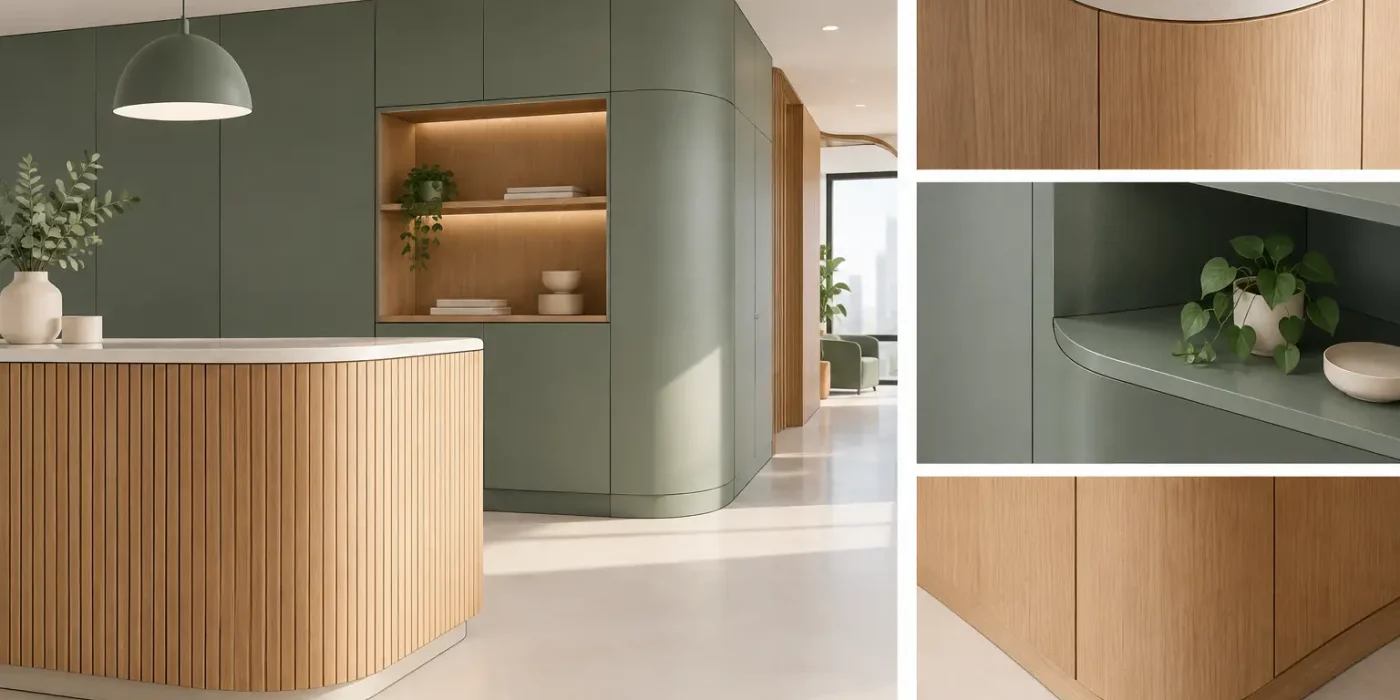
A curved reception desk, fluted wall, radius banquette, or sweeping ceiling bulkhead can define an interior. It can also become the point where an otherwise coordinated fit-out loses time, material, and finish quality. The best details for curved joinery turn a visual curve into a controlled fabrication and installation sequence, with clear geometry, realistic materials, and defined interfaces.

For hotels, villas, retail stores, restaurants, and commercial interiors, curved elements should not be treated as standard joinery with a different elevation. Their performance depends on the information behind the visible face: radii, setting-out points, substrate build-up, joint locations, grain direction, access, tolerances, and the relationship to adjoining finishes. When these items are resolved in the shop drawing stage, the manufacturing team can price, produce, and install with confidence.

Start With Geometry That Can Be Set Out

A curve must be measurable before it can be made. A plan or rendered perspective may communicate design intent, but fabricators need geometry that supports cutting, bending, templating, and site verification. The drawing package should identify whether the form is a true radius, an elliptical curve, a freeform spline, or a sequence of straight facets intended to read as a curve.

For true-radius work, show the center point, radius dimension, chord dimensions where useful, and the start and end tangent points. These references allow the workshop and site team to set out the component from consistent control points. A dimension reading only “R 1200” is rarely sufficient when the curve must connect precisely to a straight run, door return, column, or floor pattern.

Freeform shapes require even greater discipline. Provide coordinated plan, elevation, and section views, supported by a dimensioned grid or coordinate schedule. If the component is generated from a 3D model, the drawing should still state the governing dimensions and reference datums. Fabricators should not be asked to interpret an aesthetic profile from a rendering or an unverified model export.

Site conditions matter as much as drawing geometry. Before releasing curved joinery for production, verify the as-built location of structural walls, columns, floor levels, and MEP penetrations. A minor deviation in a radial wall can create an obvious uneven gap along a long curved panel. Where the risk is high, include a field-template or laser-survey requirement in the technical documentation.

Best Details for Curved Joinery Begin With the Substrate

The finish layer is only as accurate as the structure beneath it. Curved joinery details should clearly distinguish between the visible finish, the flexible backing or carrier, the framing system, and the fixing method. This is particularly important where the design calls for timber veneer, laminate, solid-surface material, metal, upholstered panels, or decorative fluting.

A curved plywood substrate may be appropriate for a painted wall feature or a veneered reception front, provided the specified bending radius suits the board thickness and grain orientation. Tight radii may require laminated layers, kerf-cut boards, CNC-cut ribs with flexible skins, or purpose-made bending plywood. Each solution has different implications for labor, stability, cost, and finished appearance.

The section detail should state the substrate thickness, rib spacing where applicable, backing support, adhesive or mechanical fixing strategy, and the required flatness of the finished surface. This prevents a common failure: a visually smooth curve that reveals telegraphing ribs, adhesive lines, or segmented backing through a high-gloss paint or thin veneer finish.

For freestanding items such as curved counters and banquettes, show the internal frame as well as the external cladding. The frame must carry countertop loads, accommodate service routes, resist impact at the base, and allow transport into the building. A single large curved unit may look efficient on paper but be impossible to move through a finished lobby, service elevator, or corridor. Shop drawings should therefore identify practical module breaks and the method of reassembly.

Match the Material to the Radius

Not every finish can make every curve. Natural veneer may be pressed successfully around a generous radius, but it can split, spring back, or show inconsistent grain on a tight return. HPL can perform well on suitable radii, while some decorative laminates have manufacturer-specific minimum bending limits. Solid-surface material can be thermoformed, but the process needs controlled temperatures, approved molds, and realistic allowances for fabrication.

Metal cladding introduces another set of variables. Brushed stainless steel, bronze-effect metal, and powder-coated aluminum may show distortion, oil-canning, or inconsistent brushing if the backing is uneven. The detail should establish sheet thickness, bending direction, fold returns, joint treatment, and whether the finish runs continuously around the curve or is divided into planned panels.

For timber finishes, specify the grain direction at every curved face. A continuous horizontal grain can reinforce the shape of a reception desk, whereas vertical grain may better suit a tall fluted wall. The choice affects veneer yield, matching requirements, panel joint positions, and cost. It should be deliberate rather than left to workshop interpretation.

Control Joints, Reveals, and Panel Breaks

Curved joinery is rarely fabricated as one uninterrupted surface. The strongest detail is not the one that hides every joint at any cost. It is the one that positions joints where they are technically achievable and visually intentional.

Use shadow gaps, metal inlays, expressed reveals, changes of material, or fluted rhythm to divide a curved elevation into manageable modules. A 10 mm reveal may accommodate movement and installation tolerance while giving the composition a crisp architectural line. On a reception counter, a planned joint at a drawer division or service access point is usually more convincing than a random seam placed where a sheet ends.

Joint strategy must account for the material. Veneer joints need matching and grain continuity requirements. Stone or sintered-surface returns need support and carefully located seams to avoid weak narrow pieces. Upholstered curved panels need consistent segmentation, stitching, foam build-up, and alignment with the underlying frame. The drawing should show these decisions in elevation and section, not merely note “as per approved sample.”

Where a curved unit meets a wall, floor, ceiling, or glazed partition, avoid assuming the adjoining construction is perfectly true. Define a scribe allowance, flexible sealant joint, shadow gap, or cover trim. This is especially relevant in fit-out projects where base-build tolerances and multiple trade interfaces can affect final alignment.

Detail the Interfaces Before They Become Site Problems

The most costly curved-joinery issues often occur at interfaces. A curved wall may intersect a linear ceiling feature, a stone floor border, an air-conditioning grille, or a fire-rated door frame. Each crossing needs a coordinated section and a clear responsibility for tolerances and finishing.

For example, if a curved timber bulkhead contains recessed linear lighting, the detail should establish the lighting channel profile, driver access, heat clearance, cable route, finish return, and the shadow line seen from normal viewing positions. If a banquette wraps around a column, the documentation should confirm whether the column is centered, whether a movement gap is needed, and how skirting or flooring terminates behind the seating.

Services deserve early attention. Reception desks and retail counters frequently include power, data, POS equipment, refrigeration, display lighting, or access-control devices. Curved fronts can restrict internal access and make conventional cable routes impractical. Coordinate penetrations, removable panels, ventilation grilles, and maintenance zones before the framing is fixed.

Use Tolerances as a Design Tool

Precision does not mean pretending that site work has zero variation. It means identifying where variation can occur and designing the detail to absorb it without compromising the intended result. Curved work needs tolerance planning for setting out, substrate fabrication, finish application, transportation, and final installation.

A long radius wall with a flush finish may need adjustable brackets behind the substrate. A curved stone counter may need concealed packers and a controlled silicone joint at a wall return. A feature panel meeting an uneven slab soffit may require a top shadow gap rather than a hard, flush junction.

The shop drawing should also state the critical visual tolerances. These may include consistent reveal width, alignment of flutes, continuity of lighting lines, and level countertop edges. Not every dimension carries the same visual importance. Highlighting the critical items helps the workshop and site team focus quality checks where they matter most.

Coordinate Drawings, Samples, and Approvals

Curved joinery benefits from a disciplined approval sequence. First, coordinate the geometry with architecture, interiors, structure, and MEP. Then issue fabrication-level plans, elevations, sections, details, and component schedules. Finally, review material samples, mock-ups, or first-off pieces where the curve, finish, and joint treatment are visually sensitive.

A sample confirms color and texture, but a mock-up can test the complete assembly. It reveals whether veneer is cracking at the radius, whether a reveal remains even, whether a metal finish reflects backing imperfections, and whether lighting creates unwanted shadows. For prominent lobby, hospitality, and retail features, this step often protects both the design intent and the project budget.

Design Studio LLC develops accurate, comprehensive joinery shop drawings that give project teams this level of control. With coordinated documentation, curved work becomes easier to price, fabricate, inspect, and install across demanding fit-out environments.

The best curved detail is the one that still looks intentional after survey adjustments, workshop handling, and final site installation. Define the geometry, build the right substrate, plan the joints, and give every interface a clear answer before the first panel reaches the factory floor.

Design Development Versus Construction Documentation

Design Development Versus Construction Documentation

A hotel lobby may look fully resolved in a presentation rendering while still lacking the information a joinery workshop needs to build it. The difference between design development versus construction documentation is where that gap is closed. One stage proves that the design can work; the next communicates exactly how it must be priced, fabricated, coordinated, and installed.

For architects, interior designers, contractors, and developers, treating these stages as interchangeable creates avoidable risk. Late material decisions, unclear interfaces, missing dimensions, and uncoordinated services do not remain drawing issues. They become variation claims, production delays, site rework, and compromises to the intended guest or customer experience.

What Design Development Is Meant to Achieve

Design development turns an approved concept into a practical interior or architectural solution. The team moves beyond layouts, mood boards, and indicative visuals to establish the major decisions that define scope, function, performance, and cost.

At this point, a hotel guestroom scheme should identify the bed-wall arrangement, wardrobe capacity, loose and fixed furniture strategy, key materials, lighting intent, and the relationship between the ceiling, flooring, and service zones. A retail project should confirm fixture types, customer circulation, product-display requirements, storage needs, signage allowances, and brand-critical finishes. The objective is not yet to tell a fabricator every screw location. It is to make sure the design decisions are sufficiently mature to be coordinated and documented without repeated redesign.

A strong design development package commonly includes developed plans, reflected ceiling plans, elevations, sections at critical areas, room data, finish schedules, outline specifications, and selected 3D views. Dimensions are added where they affect planning and coordination, while materials and construction approaches are tested for suitability. This stage also identifies items that need specialist input, such as fire-rated assemblies, acoustic treatments, stone cladding, bespoke metalwork, commercial kitchen interfaces, audiovisual requirements, or manufacturer-led systems.

The Central Question at This Stage

Design development asks: can this proposal meet the brief within the available space, budget, program, and technical constraints?

That question requires honest trade-offs. A full-height feature wall may suit the visual concept but conflict with access panels or sprinkler coverage. A curved reception desk may express the brand but demand a fabrication method that changes cost and lead time. A premium veneer may be appropriate for a villa or boutique hotel, yet its sheet size, grain matching, substrate, and edge details must be considered before it is carried into detailed documentation.

The output should give the client and delivery team confidence to approve the direction. It should also create a controlled basis for the next stage. If fundamental planning, material, or scope decisions remain open, construction documentation will become a costly design workshop rather than a reliable production process.

Design Development Versus Construction Documentation in Practice

The simplest distinction is that design development defines what is being built and why, while construction documentation defines how it is to be built, coordinated, and verified.

Construction documentation takes approved design decisions and converts them into a complete instruction set for procurement, construction, fabrication, and installation. In interior fit-out work, that instruction set must be clear enough for multiple parties to act consistently: the main contractor, fit-out contractor, joinery manufacturer, MEP subcontractors, ceiling contractor, stone supplier, glazing specialist, and site supervision team.

This transition is especially significant for high-detail projects in Dubai and across the GCC, where projects often involve accelerated programs, imported finishes, specialist packages, and several approval stakeholders. A drawing may be visually attractive and still be inadequate for execution if it does not establish levels, tolerances, service clearances, fixings, material build-ups, and responsibility at interfaces.

Construction Documents Are Not Just More Detailed Drawings

More dimensions alone do not make a document construction-ready. The information must be coordinated, consistent, and organized around how work is actually delivered.

For example, a joinery elevation for a reception desk should identify overall dimensions, module sizes, material codes, veneer direction where relevant, stone thickness, metal trims, shadow gaps, drawer and door operation, hardware, internal components, countertop details, access requirements, and interfaces with power, data, lighting, or signage. Sections should clarify the assembly rather than leave the workshop to infer it. Details should resolve the points where finishes meet, where tolerances matter, and where one trade hands work to another.

A construction documentation package may include coordinated general arrangement drawings, detailed plans and elevations, enlarged areas, sections, joinery shop drawings, ceiling coordination drawings, finish schedules, door and ironmongery schedules, material specifications, and installation details. The exact scope depends on the project procurement route and contract responsibilities. Design-and-build contractors may require a different level of employer-issued information than a traditional tender package, but ambiguity should never be treated as flexibility.

Why the Handover Between Stages Often Fails

Problems usually arise when a project proceeds to detailed drawings before decisions have been made, or when designers assume a contractor will resolve technical matters without affecting design intent. Both situations shift risk downstream.

One common issue is a finish selection that has not been tested against its application. A specified wall covering may not suit high-traffic hospitality use. A porcelain slab may exceed practical handling dimensions. A lacquer finish may be incompatible with the required profile, edge treatment, or site conditions. During design development, the team should establish the intended performance and appearance. During construction documentation, the drawings and specifications must show how that result is achieved.

Another issue is incomplete coordination with building services. A ceiling layout can appear correct until sprinkler heads, diffusers, access panels, speakers, detectors, and linear lighting are overlaid. Similarly, joinery can be manufactured correctly and still fail on site when electrical points, plumbing connections, or structural constraints have not been verified. Coordination is not an administrative check. It protects dimensions, finish quality, access, and installation sequence.

Changes are sometimes unavoidable. Client operational needs may evolve, existing-site conditions may differ from surveys, or authority requirements may introduce revisions. The practical goal is not to eliminate every change. It is to ensure each change is documented, assessed for cost and program impact, and issued through a controlled revision process before fabrication begins.

The Information Needed for Fit-Out and Joinery Delivery

Interior projects depend heavily on the quality of detailed documentation because many visible elements are custom-made. Unlike standardized products, bespoke joinery and decorative finishes cannot rely on a generic drawing note.

Fabrication-ready joinery documentation should translate the approved design into measurable components. It needs accurate setting-out dimensions, reference levels, finished floor levels, material and finish references, construction sections, fixing methods, hardware requirements, and coordination with adjacent finishes. Where a feature includes lighting, mirrors, glass, metal, or stone, each interface needs a clear detail and a defined responsibility.

Installation-ready information also considers the site reality. Can a unit be transported through the available access route? Is there enough tolerance at an irregular wall? Does the sequence allow flooring, wall finishes, and joinery to meet cleanly? Are access panels still accessible after cladding is installed? These questions are commercially important because workshop time and site labor are expensive places to discover omissions.

Design Studio LLC supports this transition through accurate, comprehensive shop drawings developed for the way fit-out teams fabricate and install. Its dedicated team of joinery and fit-out draughtsmen coordinates design intent with material realities, site interfaces, and practical detailing, helping project teams maintain quality without losing control of program or cost.

A Better Workflow for Clearer Documentation

The most reliable process establishes decision gates rather than allowing every drawing to advance at the same pace. First, confirm the design basis: planning, key dimensions, material direction, operational requirements, and budget-sensitive elements. Next, coordinate critical interfaces with architecture, structure, and MEP before releasing detailed joinery or ceiling information. Then develop shop drawings and details from verified references, with regular review by the relevant design and delivery stakeholders.

Early 3D visualization can be valuable here, particularly for guest-facing spaces, retail concepts, and high-end residential interiors. It allows the team to validate visual hierarchy, proportion, and material balance before committing to fabrication details. It does not replace technical drawings. A rendering can show the desired effect; coordinated documentation establishes the dimensions, materials, and assemblies required to reproduce it on site.

Approval discipline also matters. A clear drawing register, revision status, issue purpose, and documented comments prevent teams from manufacturing from superseded information. For fast-track projects, package releases may be necessary, but each released zone or item should be sufficiently coordinated for its procurement and production stage.

Choose the Right Level of Detail at the Right Time

Design development and construction documentation are connected, but they serve different decisions. Design development protects the project from pursuing the wrong solution. Construction documentation protects the approved solution from being interpreted differently by every trade involved.

The right investment depends on project complexity. A small, repeatable retail rollout may use standardized details and a focused documentation set. A luxury villa, hotel public area, cinema, or complex commercial interior needs deeper coordination because bespoke features, finishes, services, and site conditions multiply the number of interfaces.

Before the next package is issued, ask a practical question: could the responsible contractor or fabricator build this element without guessing? If the answer is no, the drawing has not yet completed its job. Clear decisions first, then clear instructions, give every project team a stronger path to precise fabrication and confident on-site execution.

Hospitality Bathroom Drawing Guide for Fit-Out Teams

Hospitality Bathroom Drawing Guide for Fit-Out Teams

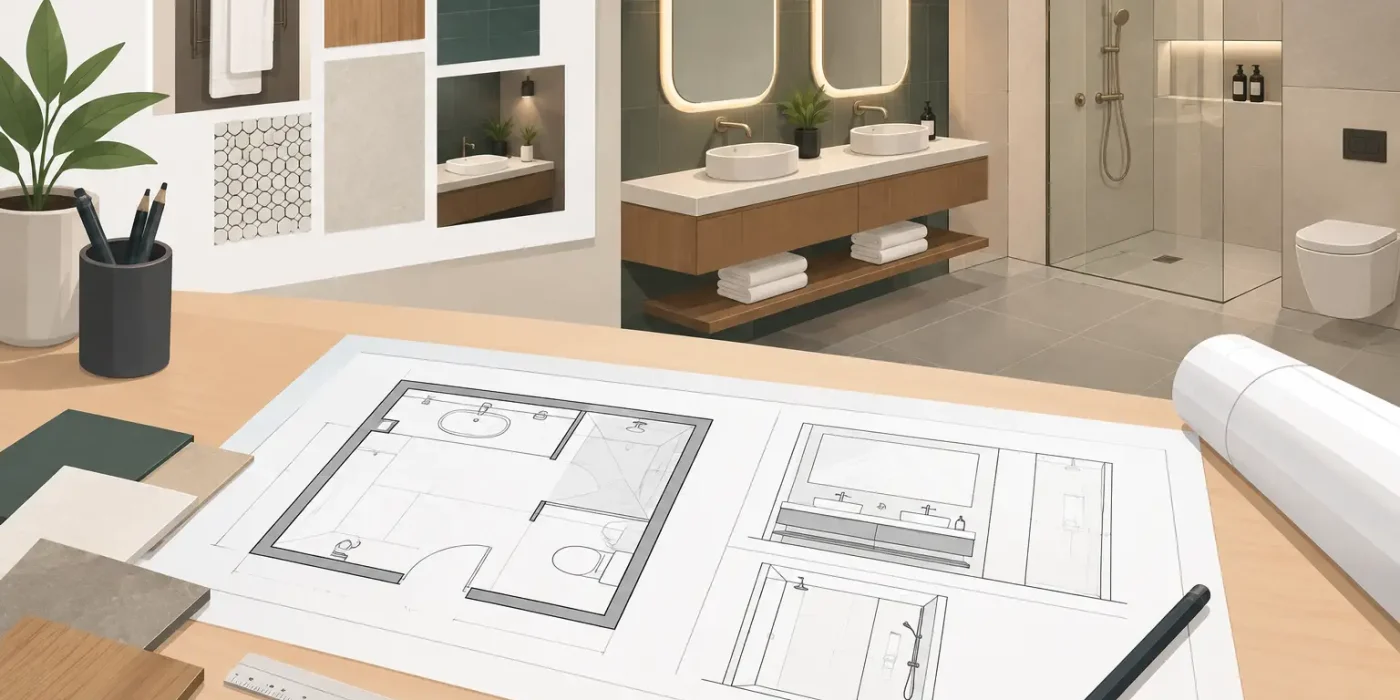
A hotel bathroom can occupy a small footprint while carrying an unusually high coordination burden. Within a few square feet, the fit-out team must align sanitaryware, plumbing, electrical points, ventilation, waterproofing, stone or tile finishes, mirrors, accessories, and custom vanity joinery. This hospitality bathroom drawing guide explains how to turn the intended guest experience into coordinated, fabrication-ready information that supports quality installation.

For hotel operators and project teams, the objective is not simply a visually attractive bathroom. It is a repeatable room type that performs reliably, can be cleaned and maintained efficiently, complies with project requirements, and can be delivered across hundreds of keys without site improvisation.

Start With a Coordinated Bathroom Basis

Bathroom shop drawings should begin only after the design intent has been tested against the architectural grid, approved room layout, structural constraints, and MEP design. A vanity that looks correctly positioned on an interior design plan may conflict with a plumbing stack, access panel, duct route, or door swing once technical coordination begins.

The drawing package should establish a single reference point for dimensions and levels. This includes finished floor level, ceiling level, wall build-up thicknesses, door opening dimensions, and the centerlines of key fixtures. In hospitality projects, minor inconsistencies multiply quickly. A 10 mm discrepancy in a typical-room bathroom can affect vanity fabrication, tile setting-out, glass partition alignment, and the placement of accessories throughout the property.

Before developing detailed elevations, the drafting team should confirm the bathroom type schedule. Typical guest rooms, accessible rooms, suites, connecting rooms, public restrooms, spa changing areas, and staff facilities may share finishes while requiring different clearances, fixture arrangements, or operating requirements. Treating every bathroom as a variation of one typical detail often creates avoidable site queries.

What a Hospitality Bathroom Drawing Package Should Include

A complete package is coordinated across disciplines rather than limited to attractive interior elevations. The level of detail depends on procurement route and project stage, but an installation-ready set normally includes the following information:

  • Dimensioned general arrangement plans showing walls, doors, fixtures, floor falls, drains, and setting-out references.
  • Internal elevations for every wall, with finish extents, tile grid, sanitaryware, accessories, mirrors, lighting, and service points.
  • Reflected ceiling plans identifying ceiling levels, access panels, exhaust grilles, downlights, shower lighting, and ceiling finish transitions.
  • Joinery drawings for vanities, mirror cabinets, ledges, storage units, and service-access elements.
  • Sections and enlarged details at showers, bathtub surrounds, vanity walls, thresholds, niches, glass screens, and waterproofing transitions.
  • Schedules for sanitaryware, fittings, accessories, tiles, stones, glass, sealants, and hardware, coordinated with approved samples and specifications.

The value of these drawings lies in their relationship to one another. A wall elevation cannot show a rain shower at one height while the plumbing coordination drawing locates the concealed valve elsewhere. Similarly, a reflected ceiling plan must allow practical access to valves, fan coil equipment, or controls where required. Drawing coordination is where design intent becomes buildable.

Plan the Layout Around Use, Maintenance, and Tolerances

Guest comfort begins with circulation. Door swings, shower screen openings, toilet clearances, towel access, and the approach to the vanity should be reviewed at full scale, particularly in compact rooms. A drawing should demonstrate not just that fixtures fit, but that a guest and housekeeping staff can use the space without awkward conflicts.

The vanity deserves particular attention because it brings several trades together. Its overall width, countertop depth, basin position, tap centerline, mirror location, lighting, waste connection, and under-counter access all need agreement before manufacture. If the vanity is stone-clad or integrates a backlit mirror, the drawings must also define support framing, fixing methods, removable panels, and power provisions.

Tolerance planning is equally important. Walls are rarely perfectly straight, and tiles, stones, glass, and joinery each have different fabrication and installation tolerances. Avoid fixing vanity dimensions solely from unfinished masonry lines. Show datum references, required scribe allowances, packing zones, and concealed shadow gaps where applicable. These details protect the visual quality of the room while giving installers a realistic method of adjustment.

Coordinate MEP Before Issuing Joinery for Fabrication

Bathroom coordination often fails when services are treated as a separate exercise from finishes and joinery. Concealed plumbing may require a deeper wall, a revised vanity carcass, or an access solution that affects the final appearance. Electrical outlets in vanity drawers, demister pads behind mirrors, sensor controls, and lighting drivers all require physical space and maintainable access.

A practical coordination review should compare the interior drawing set against plumbing, electrical, and mechanical information line by line. Confirm hot and cold water points, waste routes, floor drain locations, ventilation grilles, electrical isolators, lighting controls, and low-current requirements. The team should also verify whether fixture manufacturers specify exact rough-in dimensions, pressure requirements, or service clearances.

Where the project uses prefabricated bathroom elements or repeated vanity units, early coordination delivers substantial commercial value. Once a typical detail is resolved and signed off, the same controlled information can support consistent production across room floors. However, repetition should not hide genuine site differences. Stack offsets, structural drops, and shaft positions must still be checked by room type and location.

Draw Waterproofing and Floor Falls as Construction Details

Waterproofing is not a background specification item. It needs clear representation in plans, sections, and details, especially at shower zones, thresholds, drains, niches, and wall-to-floor junctions. The drawings should identify the required waterproofing extents, membrane upturns, protective layers, sealant joints, and interfaces with door frames or glass screens in line with the project specification and local requirements.

Floor falls require the same discipline. A plan may show a linear drain, but the installer also needs the fall direction, drain level, tile cut strategy, and transition to the dry zone. Large-format tiles can create a conflict between the desired visual pattern and the geometry required to drain water effectively. In those cases, the project team must make a deliberate choice: adjust the tile layout, select a different drain solution, or introduce a discreet fall line. The right answer depends on the finish, room type, and performance criteria.

Threshold details should be reviewed early. A level entry can improve accessibility and visual continuity, yet it demands precise waterproofing, drainage, and door-frame coordination. In other projects, a modest threshold may provide a more forgiving water-control detail. The drawings should make that decision explicit rather than leaving it to site interpretation.

Use Elevations to Control Finish Quality

Bathroom elevations are the primary control document for visual alignment. They should show tile module sizes, joint locations, stone grain direction where relevant, feature bands, niches, mirror edges, accessory heights, and the relationship between fittings and finish joints. Centering a mixer on a tile joint or placing a socket against a narrow tile cut can weaken an otherwise refined design.

Finish setting-out should account for real fixture dimensions, not generic symbols. Confirm the actual cover plates, basin outlines, shower controls, hand shower brackets, toilet flush plates, and accessories selected for the project. This is especially important where premium finishes use book-matched stone, mosaic, metal trims, or custom-cut porcelain.

Mock-ups are valuable for high-end rooms and public bathrooms because they test more than appearance. They reveal whether joints align, access panels are discreet, cleaning is practical, lighting is flattering, and components can be installed in the intended sequence. The drawing package should be updated to reflect approved mock-up decisions, not left behind as an earlier design record.

Establish Clear Approval and Revision Control

Hospitality projects move quickly, and bathrooms can be affected by late selections, operator comments, or procurement substitutions. A controlled drawing process identifies revision status, issue purpose, approved materials, and outstanding coordination items. Fabrication should not proceed on drawings marked for review or on an elevation that does not match the latest fixture schedule.

Design Studio LLC supports this process through detailed shop drawings developed by a dedicated team of joinery and fit-out draughtsmen and coordinators. For hotel projects, the focus is clear: provide coordinated technical information that allows designers, contractors, manufacturers, and site teams to work from the same intent.

The best hospitality bathrooms feel effortless to the guest because the complexity has been resolved before installation begins. When the drawing set makes every interface clear, the site team can spend less time interpreting and more time delivering the finish, performance, and consistency the hotel brand expects.

Joinery Tolerances Explained for Fit-Out Teams

Joinery Tolerances Explained for Fit-Out Teams

A reception desk can be fabricated exactly to its approved drawing and still fail at installation. The usual reason is not poor workmanship. It is that the drawing treated a real site condition, material movement, or adjacent trade interface as if it were perfectly fixed. Joinery tolerances explained in practical terms means defining how much variation a component, opening, level, or joint can accept while still achieving the intended appearance and function.

For hotels, villas, retail environments, cinemas, and commercial interiors, tolerance management is a core part of protecting design intent. It turns dimensions into buildable information, gives fabricators clear limits, and allows site teams to install finished joinery without forcing panels, opening uneven gaps, or damaging completed surfaces.

What Joinery Tolerances Actually Mean

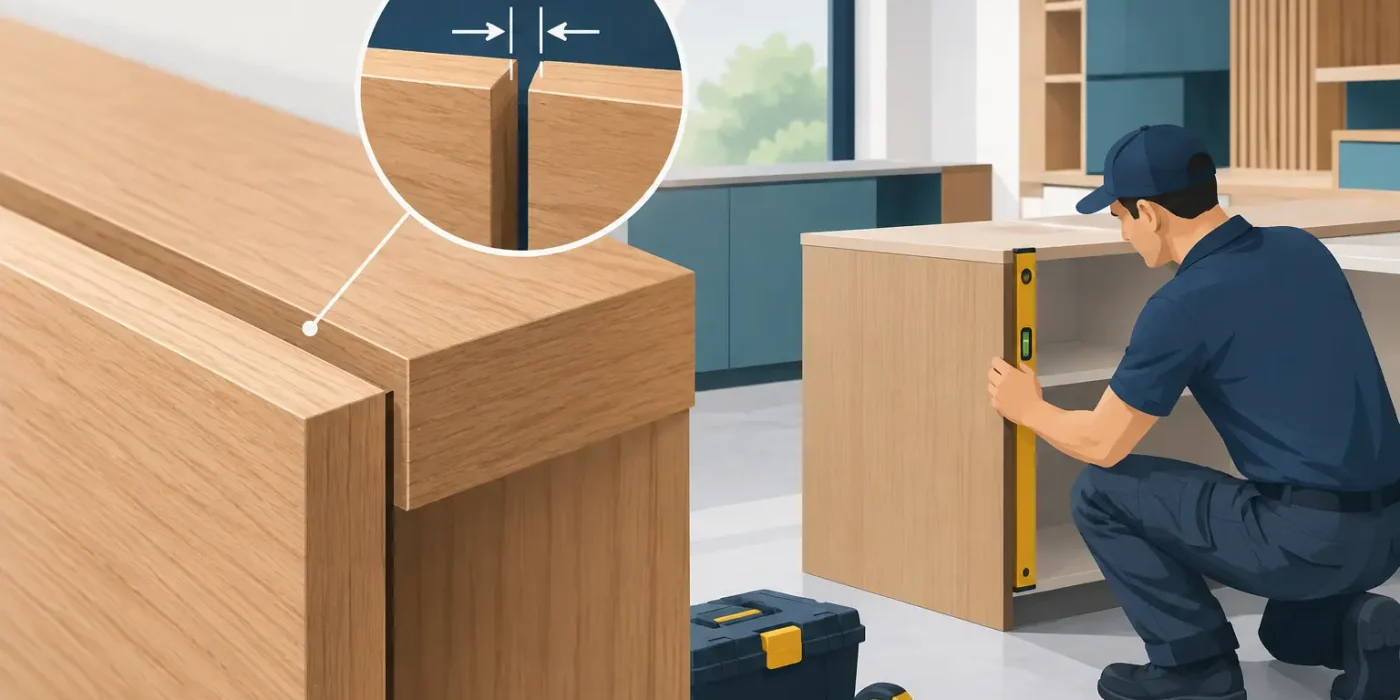
A nominal dimension is the target size shown on a drawing. A tolerance is the permitted variation from that target. If a cabinet is designed at 1200 mm wide, the fabrication and installation process must establish whether it must be exactly 1200 mm, or whether a defined range is acceptable. The answer depends on what the cabinet connects to, the material used, the finish standard, and whether the component must align with adjacent elements.

Tolerances are not an invitation to accept inaccurate work. They are controlled allowances that recognize construction reality. Concrete walls can be out of plumb, floor finishes can vary in thickness, plaster can build up differently across a wall, and timber-based boards can react to humidity. A good tolerance strategy identifies these variables early and assigns responsibility for managing them.

The distinction between fabrication tolerance and installation tolerance is especially important. Fabrication tolerance controls the accuracy of the component produced in the workshop. Installation tolerance addresses the variation at site and the adjustment available during fixing. A precisely machined cabinet may still require scribes, shadow gaps, adjustable legs, or filler panels because the surrounding construction is not equally precise.

Joinery Tolerances Explained at Key Interfaces

The highest-risk areas are usually interfaces, not the cabinet box itself. A joinery package must coordinate with walls, floors, ceilings, stone, glass, metalwork, MEP services, and loose furniture. Each interface needs a stated relationship rather than an assumed one.

Walls, corners, and recesses

Walls are rarely straight enough to receive full-height paneling or a tight-fitted wardrobe without adjustment. A panel designed to meet a finished wall directly may show a wedge-shaped gap if the wall bows or leans. Scribed edges and removable fillers give installers a controlled way to absorb this variation while retaining a clean visual line.

For recessed cabinets, the site opening should be verified after the relevant wall finishes are complete. Dimensions taken from structural drawings or early blockwork surveys are not sufficient where plaster, tile, stone, or wall cladding changes the final opening size. Shop drawings should identify the required finished opening, the allowance around the joinery, and the expected finishing detail at each edge.

Floors and ceilings

Floor level variation affects more than a visible bottom gap. It can alter door reveals, countertop levels, appliance clearances, and the alignment of a continuous joinery run. Base cabinets commonly need adjustable supports or a coordinated plinth detail so the finished countertop remains level even when the slab or floor finish is not.

Ceiling interfaces require the same discipline. A full-height cabinet that is fabricated to a nominal ceiling height can become impossible to lift into place, even if its final position would fit. The detail must account for installation sequence, lifting clearance, ceiling irregularity, and whether a top infill panel will be site-cut after measurement.

Doors, drawers, and reveals

Consistent reveals are one of the clearest indicators of quality in fitted joinery. Yet a 2 mm reveal on a single elevation has different implications from a 2 mm reveal across a long bank of doors with integrated lighting, veneer grain matching, and adjacent stone. The drawings must establish the intended reveal size, whether it is equal or intentionally varied, and the reference edge from which it is controlled.

Hardware introduces its own tolerances. Hinges, runners, locks, sliding systems, and appliance mechanisms each require manufacturer-specific clearances. The joinery detail must allow for adjustment while ensuring that handles, door edges, and internal shelves do not clash through their full operating range.

Materials and finishes

Different materials behave differently. Natural veneer and solid timber can move with environmental changes. Laminates, lacquered MDF, metal, glass, stone, and porcelain have their own dimensional limits, edge conditions, and fixing requirements. A detail appropriate for painted MDF may fail when applied to book-matched veneer or a brittle stone-faced panel.

The required finish level also changes the tolerance approach. In a back-of-house service area, a concealed filler may be acceptable. In a luxury hotel suite or high-end retail store, the same condition may require a shadow gap, a metal trim, or a deliberately designed junction that makes small site variation visually controlled rather than exposed.

Why Generic Notes Are Not Enough

A note stating “verify all dimensions on site” is useful, but it does not resolve coordination. It transfers responsibility without defining the decision that must follow the measurement. Effective shop drawings identify what must be verified, when it must be verified, the datum to use, and the acceptable response if the condition differs from the design assumption.

For example, a vanity unit may depend on final wall tile thickness, waterproofing build-up, basin template dimensions, mirror location, and plumbing outlet positions. If only the overall cabinet width is documented, the fabricator and installer are left to interpret critical information independently. That creates avoidable variation between the approved visual concept and the installed result.

Clear tolerance information should be coordinated across plan, elevation, section, and enlarged details. A dimension without a stated reference point can be misleading. Is it measured from the finished face of wall, structural grid, centerline of a basin, tile joint, or edge of adjacent stone? Establishing datums removes this ambiguity and makes checks on site faster and more reliable.

Setting a Practical Tolerance Strategy

A workable strategy starts with the project’s quality expectations and the condition of the base build. Not every component needs the same degree of precision. High-visibility joinery at a reception, feature wall, branded retail display, or executive suite should receive closer coordination than concealed storage, but both still require clear installation logic.

The most effective approach is to separate fixed dimensions from adjustable dimensions. Fixed dimensions are those that control function or alignment, such as appliance openings, countertop heights, door clearances, and locations tied to architectural grids. Adjustable dimensions are typically fillers, scribes, shadow gaps, plinths, and closure panels that can absorb measured site variation without changing the primary composition.

Survey timing matters as much as the drawing. Measuring before floor screeds, wall finishes, or ceiling closures are complete may be necessary for planning, but it should not be treated as a final fabrication release. A coordinated workflow often uses preliminary dimensions for design development, followed by a final site measure before manufacturing components that meet finished construction directly.

Where variation is significant, the project team should make an early commercial decision. The choices may include correcting the base build, revising the joinery design, increasing adjustment zones, or accepting a different junction detail. Waiting until installation usually makes every option more expensive and more disruptive.

Shop Drawings That Support Reliable Installation

Fabrication-ready drawings do more than show cabinet dimensions. They communicate the build-up of materials, finished-face references, junction details, fixing zones, hardware requirements, edge treatments, service cutouts, and installation sequence. They also show where tolerances are intentionally absorbed.

A coordinated joinery package should avoid dimension chains that accumulate small errors across a long elevation. Where alignment is critical, dimensions should reference a common datum or centerline. This is particularly valuable for repeated room types in hospitality projects, where small inconsistencies can multiply across dozens or hundreds of rooms.

The drawings should also distinguish between dimensions to manufacture and dimensions to confirm on site. This allows procurement and workshop planning to proceed without fabricating site-sensitive components too early. It supports better sequencing among fit-out contractors, MEP teams, stone contractors, and ceiling trades.

Design Studio LLC applies this level of coordination through detailed shop drawings developed for fabrication and installation, not simply approval. With a dedicated team of joinery and fit-out draughtsmen and coordinators, the focus is on resolving dimensional risk before it becomes a workshop alteration or an on-site compromise.

The Commercial Value of Getting Tolerances Right

Tolerance coordination protects margins as well as finishes. Rework often begins with a minor issue: a wall is 12 mm out, a stone return is thicker than assumed, or a ceiling bulkhead sits lower than the reflected ceiling plan indicates. If no allowance was designed into the joinery, that minor issue can affect manufacturing, delivery, installation labor, and handover dates.

Well-documented tolerances improve accountability. Fabricators know what they are expected to achieve. Site teams know what conditions must be prepared before installation. Project managers can identify unresolved interfaces during coordination rather than after materials arrive. The result is fewer instructions issued under pressure and more predictable control of cost and program.

The best joinery details do not pretend a construction site is dimensionally perfect. They anticipate where variation will occur, preserve the intended visual standard, and give every trade a clear path to execute the work correctly. That is where tolerance becomes more than a number on a drawing – it becomes a practical safeguard for a better finished project.

Reception Counter Detailing Process for Fit-Outs

Reception Counter Detailing Process for Fit-Outs

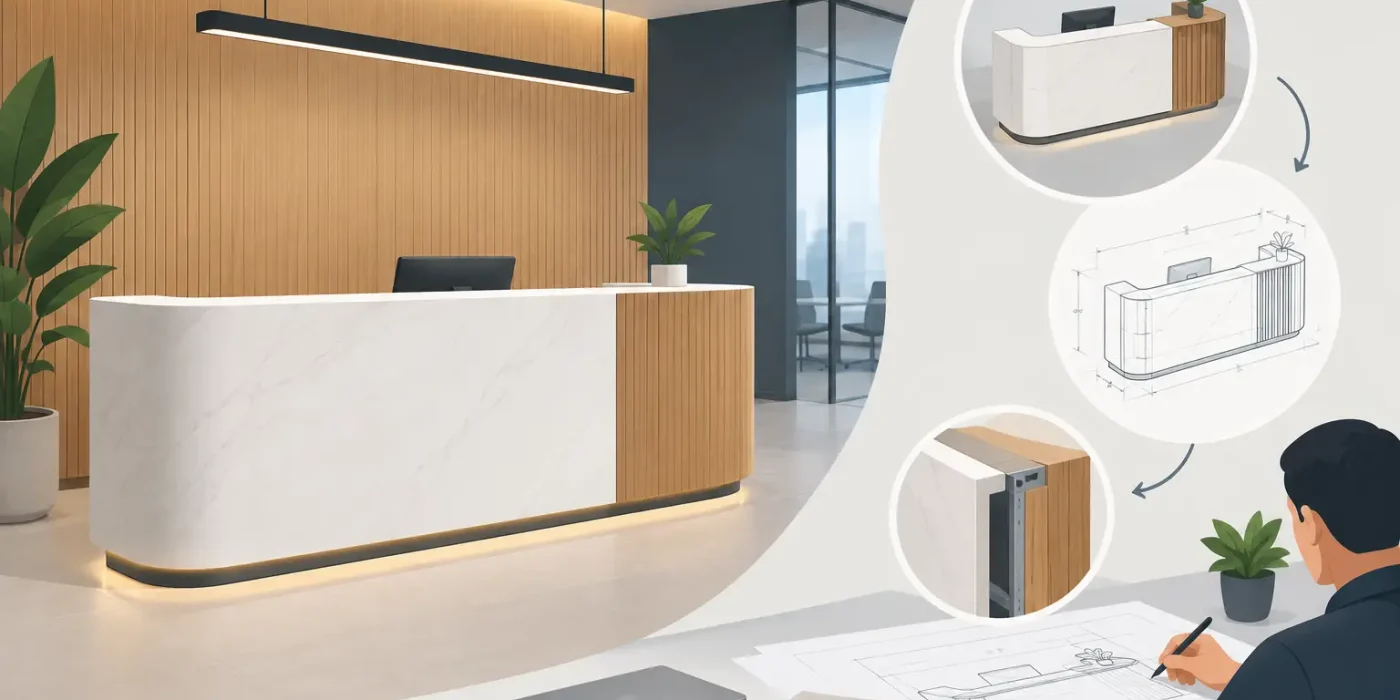
A reception counter is often the first physical touchpoint between a brand and its visitors, but it is also one of the most coordination-heavy joinery elements on a fit-out project. A disciplined reception counter detailing process converts a visual concept into a fabrication-ready package that addresses structure, finishes, services, accessibility, and site installation before issues reach the workshop or site.

For hotels, offices, retail stores, clinics, and commercial properties, the counter must do more than look refined in a rendering. It must accommodate staff workflows, protect equipment, support the selected finish materials, satisfy project requirements, and withstand daily use. Accurate shop drawings give architects, contractors, joinery manufacturers, and MEP teams a single technical reference for delivering that result.

Start With the Operational Brief, Not the Front Elevation

The front elevation may define the visual character of the counter, but it cannot define the build on its own. The detailing team first needs to establish how the reception will operate. A hotel front desk, for example, may require multiple workstations, concealed cabling, key storage, point-of-sale equipment, and an accessible lower transaction point. A retail counter may need display shelves, lockable drawers, cash management provisions, and integrated branding.

This stage should confirm the counter location, overall footprint, staff-side circulation, customer approach zones, and relationship to adjacent walls, flooring, ceilings, and columns. Existing site conditions deserve particular attention on renovation projects, where finished floor levels, wall alignment, or services may differ from original drawings.

Key inputs include the approved interior design package, architectural setting-out drawings, material schedule, equipment schedule, branding requirements, and relevant MEP information. Where information is incomplete, it is better to issue a focused coordination query than to make an untested assumption in the shop drawing.

Establish Dimensions That Work in Plan and in Use

The plan view is the foundation of reception counter detailing. It establishes counter geometry, staff working clearances, drawer and door swings, access routes, and the position of each functional zone. A curved or angled front profile may look straightforward in an elevation, yet require carefully coordinated radii, panel breaks, and support locations for fabrication.

Counter heights must be coordinated with the intended user and task. The public-facing transaction top, staff worktop, baggage ledge, writing surface, and accessible section may each have different requirements. Exact dimensions depend on the local code, project brief, operator standards, and intended equipment. The drawing package should therefore identify both finished heights and the build-up beneath each surface.

Coordinate the Build-Up, Not Just the Finished Size

A common source of site conflict is a drawing that shows only the overall counter height. Fabricators and installers also need to know the thickness of the countertop, substrate, cladding, plinth, internal framing, and any leveling allowance. When stone, solid surface, veneer, metal, or decorative laminate is specified, each material introduces different thicknesses, edge treatments, jointing methods, and support needs.

The detailer should define critical dimensions from the correct datum, usually finished floor level, and identify where floor finishes stop beneath the joinery. This is especially relevant where a counter includes recessed plinths, metal shadow gaps, or illuminated base details. Clear datum control prevents a well-fabricated counter from appearing too high, too low, or visually misaligned after final floor finishes are installed.

Develop Material and Joinery Details Early

Reception counters frequently combine materials with very different performance characteristics. A stone top may sit above timber veneer cladding, painted MDF panels, brass inlays, fluted glass, or perforated metal. The visual transition between these materials can be a defining design feature, but it must be supported by a practical joinery assembly.

Shop drawings should identify every visible finish, substrate, thickness, grain direction where applicable, edge profile, shadow gap, trim, and return. Finish codes must align with the approved material schedule so the procurement team and joinery workshop are working from the same reference. For natural stone, veneer, and patterned materials, the drawing should also call out direction, book-matching expectations, and joint locations where these affect appearance.

The technical team must assess whether the specified finish is suitable for the counter’s daily exposure. A high-gloss decorative face may show scratches in a busy public lobby. A delicate metal finish may require protective treatment. A projecting stone overhang may need concealed steel support. Detail development is where the desired appearance is tested against manufacturing tolerances, maintenance needs, budget, and long-term durability.

Integrate MEP, IT, and Lighting Requirements

A reception counter without coordinated services can become an expensive site modification. Power outlets, data points, telephone lines, display screens, card terminals, printers, intercoms, access-control devices, and charging points should be located before fabrication begins. Their final placement must suit both the equipment manufacturer’s requirements and the staff member using them.

The reception counter detailing process should show service entry points, cable routes, access panels, grommets, ventilation openings, and internal voids. It should also coordinate with floor boxes, wall outlets, and ceiling services. If cables are expected to pass through a stone top or metal cladding, the required cutouts and finishing method must be approved before material ordering.

Integrated lighting requires the same level of attention. LED strips within a recessed plinth, logo panel, shelf, or decorative feature need mounting profiles, driver locations, maintenance access, switching requirements, and heat management. A lighting concept that does not provide access to drivers or connections can create avoidable maintenance problems after handover.

Produce Drawings for Fabrication and Installation

A complete reception counter package is more than a general arrangement drawing. It should allow each party to understand its scope and sequence of work without relying on verbal interpretation. Typically, the package includes plans, elevations, sections, detailed joinery sections, enlarged feature details, material references, hardware information, and setting-out dimensions.

Sections are particularly valuable because they reveal what front elevations cannot: internal carcass construction, fixing zones, countertop support, service voids, plinth formation, and the connection between the counter and adjacent finishes. Details should distinguish between workshop-made components and site-installed elements, especially when heavy stone, glass, metalwork, or branding pieces require separate specialist coordination.

Installation interfaces must be explicit. The drawings should show how the counter is fixed to the floor, wall, or structural backing; where tolerances are absorbed; and which trades must complete work before installation. If a reception desk meets a feature wall, the team needs to decide whether the wall finish returns behind the counter, terminates at it, or is installed afterward. These decisions affect quantities, sequencing, and the quality of the final junction.

Review, Coordinate, and Release With Control

Before release for fabrication, the counter should undergo coordinated review with the design team, fit-out contractor, joinery manufacturer, MEP coordinator, and client representative where operational requirements are involved. The purpose is not simply to secure a signature. It is to confirm that design intent, practical construction, cost, and program remain aligned.

Particular attention should be given to long lead materials, sample approvals, mockups, hardware availability, and specialist interfaces. A counter with custom metalwork or solid-surface thermoforming may require earlier decisions than a standard laminate construction. Where the program is compressed, issuing fully coordinated fabrication information is more valuable than releasing partial details that later require costly revisions.

Design Studio LLC supports this process with dedicated joinery and fit-out drafting capacity, producing clear technical documentation for UAE and GCC project teams. The objective is always the same: reduce uncertainty before fabrication, protect the approved design, and give site teams information they can install with confidence.

A reception counter earns its value when every visible line and concealed service has been considered before the workshop starts cutting material. Treat the detail package as a construction decision tool, not a drawing deliverable, and the reception area is far more likely to open looking as intended and operating as required.

How to Prepare Restaurant Bar Fabrication Drawings

How to Prepare Restaurant Bar Fabrication Drawings

A restaurant bar can look straightforward in a concept package, yet it is one of the most coordination-intensive elements in a hospitality fit-out. To prepare restaurant bar fabrication drawings properly, the project team must resolve far more than cabinet sizes. The drawings need to align guest-facing design, bartender workflow, equipment clearances, plumbing, electrical loads, material junctions, and site installation conditions before fabrication begins.

A bar that is attractive but difficult to service, clean, install, or operate will quickly create cost and program pressure. Fabrication-ready documentation turns the approved design into coordinated instructions that joinery manufacturers, metalworkers, MEP trades, and installers can act on with confidence.

Start With Verified Design and Site Information

Bar shop drawings should not begin from a presentation rendering alone. Renderings help communicate intent, but they rarely contain every dimension, fixing method, utility connection, or access requirement needed on the workshop floor. The drafting team should first assemble the latest approved design package and verify which information is still subject to change.

The required inputs usually include the approved architectural layout, reflected ceiling plan, interior elevations, finishes schedule, equipment schedule, MEP drawings, and a current site survey. Where a bar interfaces with existing walls, columns, slab levels, or services, actual site measurements take priority over assumed dimensions. Even a minor discrepancy can affect a stone countertop joint, backbar alignment, or the position of undercounter equipment.

Before detailing starts, establish a single reference point and a consistent dimensioning system. Confirm finished floor level, wall build-ups, ceiling heights, floor falls, and the extent of tiling or other finish zones. This early coordination prevents a common problem: a joinery unit that is dimensionally correct on paper but does not fit the finished site condition.

Confirm Operational Requirements

A restaurant operator may have requirements that are not obvious from the interior design drawings. The bar team should confirm the intended service style, peak covers, equipment brands, glass storage capacity, waste handling, cleaning access, and replenishment routes. A high-volume cocktail bar requires a different working arrangement from a coffee counter, hotel lobby bar, or fine-dining wine service.

The critical question is not simply whether equipment fits inside the counter. It is whether staff can use, clean, maintain, and replace that equipment without disrupting the bar operation. Refrigeration ventilation, ice machine drainage, dishwasher access, and bottle well ergonomics should be resolved before the fabrication set is issued.

Build the Bar From Plan to Section

A complete drawing package explains the bar in multiple views because no single drawing can carry all technical information. The general arrangement plan establishes the footprint, front counter, working counter, backbar, aisle clearances, equipment positions, and interfaces with surrounding finishes. It should clearly identify fixed components versus equipment supplied by others.

Elevations communicate the guest-facing composition. They show panel divisions, shelf positions, mirror or decorative backing, lighting recesses, branding elements, and finish transitions. For a visible feature bar, elevation accuracy is especially important because small inconsistencies in panel widths, grain direction, or shelf alignment can undermine the intended appearance.

Sections are where fabrication details become practical. They define counter heights, worktop build-ups, internal cabinet construction, plinths, stone support, access panels, and fixing arrangements. A typical bar requires sections through the front counter, bartender work zone, backbar, sink area, equipment bays, and any raised display or gantry element.

Use enlarged details wherever materials or components meet. A countertop-to-front-panel junction, metal trim return, recessed LED channel, stone edge, or glass shelf support should not be left open to interpretation. The drawing must state the intended relationship, the supporting substrate, and the visible finish line.

Coordinate Equipment and Building Services Early

Restaurant bars bring together more services than many other joinery packages. Water supply, drainage, electrical power, data, ventilation, refrigeration condensate, gas where applicable, and lighting can all pass through or behind the millwork. If these items are added after cabinet details are completed, rework is almost inevitable.

Each equipment item should be identified by reference, manufacturer, model, dimensions, utility requirements, and responsibility for supply and installation. Equipment cut sheets should be checked against the drawings rather than copied without review. Manufacturers may require specific ventilation gaps, access zones, drain sizes, or electrical isolators that affect the cabinet configuration.

Coordinate the bar fabricator’s scope with MEP and specialist contractors in clear terms. The joinery drawings should show required openings, sleeves, removable panels, ventilation grilles, and access hatches. They should also identify the service connection points that must be provided by others. This distinction reduces the risk of a completed bar arriving on site before the required connections are available.

Drainage deserves particular attention. Sink and ice equipment locations must allow for pipe falls, traps, and maintenance access. Where the floor build-up cannot accommodate drainage routes, the team may need to revise equipment locations or agree on an alternative technical solution before work proceeds.

Protect Clearances and Access

A well-detailed bar protects both fabrication tolerances and future maintenance access. Do not dimension a refrigeration bay to the exact nominal width of the appliance. Allow for manufacturer requirements, installation tolerance, ventilation, and the practical movement needed to position or remove the unit.

The same principle applies to countertop appliances, undercounter sinks, speed rails, and concealed service valves. A clean elevation may favor hidden access, but maintenance cannot depend on dismantling finished panels or stonework. Removable, discreetly detailed access panels are often the better commercial choice.

Specify Materials as Buildable Assemblies

Material names alone are insufficient for fabrication. Terms such as timber veneer, brass finish, engineered stone, or fluted glass describe visual intent, but the shop drawing package must define the buildable assembly. It should state substrate type, thickness, edge treatment, finish code, grain or pattern direction, joint layout, and backing requirements where relevant.

For example, a stone bar top may require steel reinforcement, plywood backing, templating after site verification, and coordinated cutouts for sinks, beer towers, or cable grommets. A metal-clad front may need a shadow gap, concealed mechanical fixing, expansion allowance, and protection against contact with wet cleaning zones. These requirements affect cost, lead time, and installation sequencing.

Material selection also depends on the operating environment. Natural timber finishes near wet work areas may require a more durable coating system. Decorative metal can show fingerprints and scratching in high-contact zones. Open shelving can create an elegant appearance but may increase cleaning requirements and reduce concealed storage. The best detail balances the design intent with the restaurant’s operating realities.

Separate Fabrication Logic From Installation Logic

Fabrication drawings must tell the workshop how to make each component, while installation drawings must tell the site team how components come together. These are related but not identical tasks.

For fabrication, assign unique unit references, panel sizes, materials, hardware, and construction details. Indicate which components are factory assembled, which are delivered loose, and which require site finishing. For installation, show setting-out dimensions, wall and floor fixing points, leveling requirements, sequence of assembly, and interfaces with adjacent trades.

This separation is particularly valuable for long bars, curved counters, and feature backbars. A unit may need to be split into transportable modules, with joint positions selected to suit structure, material pattern, and access routes. The most visually desirable joint location is not always the most practical one, so the drafting team should coordinate with fabrication and site logistics before finalizing it.

Use a Controlled Review Process

Restaurant bar drawings should move through a structured review before they are released for production. Internal checks should verify dimensions, references, drawing coordination, material callouts, equipment requirements, and constructability. Client and consultant review should focus on design intent, operational suitability, finish approval, and scope boundaries.

Comments need to be incorporated into a tracked revision, not informally scattered across email threads. Every issued drawing should carry a revision status, date, and purpose of issue. This provides a dependable record of what was approved and reduces the chance that a workshop fabricates from a superseded file.

At Design Studio LLC, this process is supported by a dedicated team of joinery and fit-out drafting professionals who coordinate detailed technical information with the requirements of hospitality projects across the UAE and GCC. The objective is not more drawings for their own sake. It is a coordinated package that supports accurate pricing, controlled fabrication, and reliable site execution.

Common Gaps That Create Bar Rework

Most bar-related site issues can be traced to a small number of drawing gaps: unverified existing dimensions, incomplete equipment data, unclear service responsibilities, missing access provisions, or finishes that have not been detailed at junctions. Another frequent issue is overlooking installation sequence. A backbar mirror, for example, may need to be installed before shelves, lighting, or decorative trims can be fixed.

A final coordination review should test the package from the perspective of every user. Can the fabricator identify every material and component? Can the MEP contractor locate every required connection? Can the installer set out and level the units? Can the operator maintain equipment after handover? If the answer is uncertain, the detail needs further resolution.

The strongest restaurant bar fabrication drawings make site decisions before the site is forced to make them. That discipline protects the design, gives fabricators clear instructions, and gives the operator a bar built to perform through daily service.

Custom Reception Desk Guide for Fit-Out Teams

Custom Reception Desk Guide for Fit-Out Teams

A reception desk can be visually approved and still fail at fabrication or installation. A return panel may conflict with a floor box, a stone front may lack adequate support, or a feature-lighting detail may have no accessible service route. This custom reception desk guide focuses on the technical decisions that turn a design concept into a coordinated, buildable, and durable front-of-house element.

For hotels, offices, retail stores, clinics, and residential developments, the reception desk is often the first built feature a visitor sees. It must represent the intended brand and interior concept, but it also has to perform daily: supporting staff, technology, security, storage, accessibility, and maintenance. That combination makes it a critical joinery package, not simply a decorative counter.

Start With Operations, Not the Elevation

The design elevation establishes the desk’s visual language, but operational planning defines whether the desk works. Before finalizing its shape, project teams should identify who uses it, what equipment they require, and how guests or visitors interact with it.

A hospitality reception may need multiple check-in positions, concealed key-card storage, baggage coordination space, POS terminals, printers, and back-office access. A corporate lobby may prioritize visitor management screens, access-control equipment, parcel handling, and a clear sightline to entry points. Retail requirements can include cash drawers, wrapping areas, anti-theft systems, and integrated display elements.

These requirements affect the internal joinery layout, counter depths, cable routes, ventilation allowances, and access panels. They also influence staffing comfort. A reception counter that looks proportionate in a rendering can be impractical if there is insufficient knee clearance, monitor depth, or room for a chair to move behind it.

Coordinate operational input early with the operator, interior designer, MEP consultant, security specialist, and fit-out contractor. Late additions are a common source of visible patchwork, unnecessary cost, and approval delays.

Establish Dimensions Around Users and Access

Reception desks typically contain at least two functional levels: a public-facing transaction counter and a staff worktop. Their final heights depend on the project brief, local accessibility requirements, and the function of each position. The key is to document the intended use rather than rely on generic dimensions.

For example, a standing visitor counter needs a usable writing or transaction surface, while a dedicated accessible position requires clear approach space and an appropriately designed counter section. Staff-side worktops must suit seated or standing operation, with enough depth for monitors, keyboards, paperwork, and equipment without forcing cables into view.

Clearances behind the desk deserve equal attention. Confirm circulation routes, chair movement, drawer opening, equipment servicing, and access to cupboards. Where the desk is positioned against a feature wall, check whether concealed doors, signage, fire equipment, or maintenance zones affect the available footprint.

Curved and angled reception desks require additional discipline. Their geometry should be set out from reliable site references, with clear center points, radii, segment lengths, and setting-out dimensions. A visually smooth curve in a design model can become difficult to fabricate if panel divisions, material sizes, and structural support are not resolved in the shop drawings.

Custom Reception Desk Guide: Material Decisions That Last

Material selection should balance appearance, durability, maintenance, lead time, and fabrication method. The visible front face may combine timber veneer, laminate, solid-surface material, metal, stone, fluted panels, glass, or upholstered elements. Each material has different edge, joint, backing, and support requirements.

Natural stone creates a premium arrival experience, particularly in hotel and high-end commercial lobbies, but its weight and vein direction require careful coordination. The supporting frame, substrate, joint locations, lifting strategy, and tolerance at adjacent finishes should be defined before fabrication. Stone returns and thin projections may need concealed reinforcement that is not apparent in the design intent.

Timber veneer offers warmth and flexibility, yet veneer matching, grain direction, panel sequencing, and protection at high-touch corners need clear instructions. Laminate can provide strong durability and cost control, but exposed edges, radius limitations, and alignment between panels must be detailed. Metal finishes may require separate samples for color, sheen, coating system, and joint treatment because minor variation is highly visible under lobby lighting.

At the transaction surface, specify materials for actual daily use. A glossy finish may look refined but show fingerprints and scratches. A recessed solid-surface liner may protect a delicate stone counter. High-traffic areas benefit from replaceable or easily repairable components, especially where luggage, payment terminals, or delivery items contact the desk.

Full-size material samples and a coordinated mockup are worthwhile when the desk includes multiple premium finishes. They allow the team to assess color, reflectivity, joints, lighting response, and workmanship before the main fabrication package proceeds.

Detail the Desk as a Coordinated Assembly

A reception desk should be documented as a sequence of buildable layers, not just as plan and elevation drawings. Comprehensive shop drawings should show the carcass construction, framing, substrate, finish panels, edge details, counter build-up, plinth, access doors, hardware, and interfaces with adjoining walls and floors.

The drawings should also clarify what is factory-fabricated and what is completed on site. Large desks may be split into transportable modules, with defined connection details and finish-joint locations. This is particularly relevant in towers, hotels, and retail developments where lift sizes, loading access, and restricted working hours affect the installation approach.

Tolerances are essential. Existing floors and walls are rarely perfectly level or straight, particularly in refurbishment work. Include adjustable leveling provisions, scribe panels, shadow gaps, or concealed closure details where appropriate. A desk that relies on rigid, exact site dimensions without adjustment capacity can leave installers with exposed gaps or misaligned finishes.

Where the desk meets flooring, determine whether it sits on top of the finished floor, is installed before flooring, or incorporates a recessed base. The answer affects final height, plinth detailing, cleaning access, and sequencing with other trades. These decisions should be agreed before procurement, not solved during installation.

Coordinate Power, Data, Lighting, and Security

Technology coordination is frequently the difference between a clean reception environment and a desk crowded with loose cables. Every power outlet, data point, HDMI connection, charging point, network device, and equipment power supply should have a defined location and access route.

Show cable grommets, cable trays, vertical risers, removable panels, and service voids in the joinery drawings. Confirm that cables can be installed and replaced without dismantling finished panels. Equipment heat loads must also be considered. Enclosed cabinets for printers, IT hardware, or AV equipment may need ventilation grilles, fan provisions, or clearances required by the manufacturer.

Lighting details require the same level of coordination. LED strips under counter overhangs, within logo panels, or behind feature cladding need accessible drivers and clearly identified wiring paths. Specify diffuser profiles, aluminum channels, light direction, color temperature, and switching responsibility. A lighting detail that omits driver access creates a future maintenance problem in one of the lobby’s most visible elements.

Security requirements should be incorporated discreetly but early. These may include panic buttons, CCTV sightlines, access-controlled storage, cash handling, visitor-management devices, or duress alarm interfaces. The joinery should support these functions without compromising the intended appearance or staff workflow.

Produce Shop Drawings That Remove Ambiguity

The reception package should provide sufficient information for approvals, fabrication, and installation without asking site teams to interpret design intent. At a minimum, it should coordinate overall dimensions, section details, materials, finishes, internal layouts, hardware, electrical provisions, setting out, and adjacent construction interfaces.

Detailed sections are especially valuable at counter edges, curved faces, illuminated panels, stone junctions, metal trims, and changes in finish thickness. These are the locations where a general arrangement drawing is rarely enough. A good detail records the material build-up, fixing method, reveal size, backing board, substrate, and responsibility for each component.

Finish schedules should use consistent references across drawings, specifications, and samples. If a reception front includes several similar timber, metal, or stone finishes, clear coding prevents costly substitutions or mismatched fabrication. Likewise, hardware should be identified by type, finish, quantity, and installation position.

Design Studio LLC supports this process through accurate, comprehensive joinery and fit-out shop drawings prepared for fabrication-ready and installation-ready delivery. With a dedicated team of technical specialists, the focus remains on translating the approved concept into coordinated information that fabricators and on-site teams can use with confidence.

Plan Approvals and Installation in the Right Order

The strongest reception desk packages do not treat approval as a single event. They move through coordinated stages: design confirmation, material selection, shop drawing review, sample or mockup approval, site measurement verification, fabrication release, and installation inspection. Each stage reduces a different type of risk.

Do not release fabrication solely from design drawings where site conditions remain unverified. Final measurements should account for finished-floor levels, wall build-ups, column positions, MEP outlets, ceiling features, and actual access constraints. For complex desks, a pre-installation meeting between the joinery contractor, fit-out manager, MEP team, and designer can prevent avoidable conflicts.

During installation, protect finished faces and check alignment, reveals, level, lighting operation, door function, and counter usability before handover. Small defects at a reception desk are immediately noticeable because the element is viewed closely and repeatedly by guests, staff, and clients.

A well-detailed desk is not merely a reception feature. It is evidence that the project team has coordinated design intent, operational needs, material performance, and installation reality. Give it the same technical attention as any high-visibility joinery package, and it will support both a polished arrival experience and dependable day-to-day operation.